
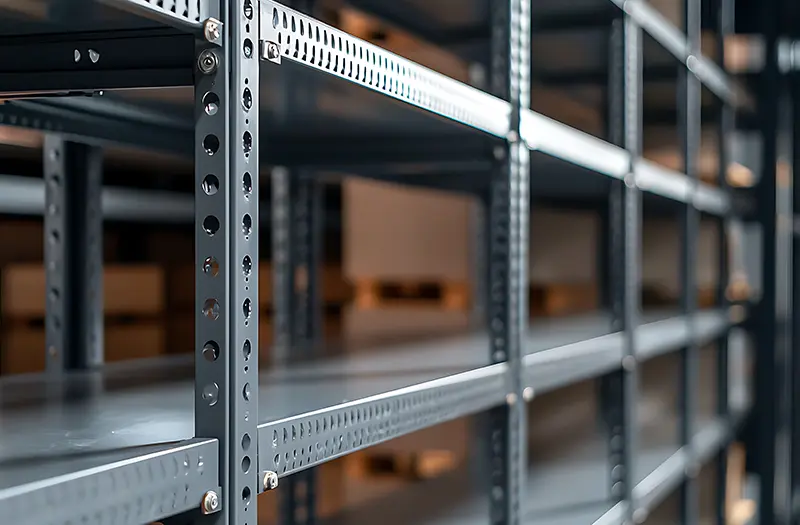
Every wholesaler knows the cost of missing inventory. A product that should be on the shelf but isn’t can send warehouse teams into panic, resulting in last-minute searches, delayed orders, overselling or unnecessary reordering. Over time, these problems add up, undermining forecasting, distorting financial reporting and damaging your business’s reputation through backorders and cancelled deliveries.
When margins are already tight and customer expectations continue to rise, preventing lost warehouse stock becomes even more vital.
Finding a solution can seem a daunting challenge, but the truth is that most stock discrepancies stem from preventable causes. From straightforward human error to outdated systems, poor organisation and a lack of real-time visibility, there are plenty of reasons why stock can go missing.
The good news? With the right approach, wholesalers can transform chaotic stock control into a streamlined, dependable process.
In this article, we take a closer look at how stock goes missing in warehouses and outline the steps your business can take to maintain complete control of its inventory. From improving layout design to adopting barcode scanning and real-time stock systems, read on to learn how to minimise errors, protect profitability and ensure your warehouse runs with maximum accuracy.
Why stock goes missing in the first place
Before you can solve the problem, it’s important to understand why it happens. Lost warehouse stock rarely disappears entirely. Instead, it becomes misplaced, mislabelled, miscounted or recorded incorrectly.
Common causes include:
Inaccurate manual processes
Warehouses that depend on handwritten notes, spreadsheets, or memory often make mistakes. If an update is missed after a pick, put away, or return, stock levels can become inaccurate. This may cause items to disappear both on paper and in the actual warehouse.
Poor warehouse organisation
Disorganised aisles, unclear bin locations and inconsistent storage practices often result in items being left in the wrong location. Without structured layout logic or defined zones, stock can easily “exist”, just not where staff expect it to be.
Inefficient or irregular stock counts
Annual or infrequent stock takes leave long periods where errors can multiply unnoticed. By the time discrepancies surface, it’s often impossible to trace which transaction caused them.
Lack of traceability for similar or small items
For wholesalers dealing with high volumes of small, similar-looking products, such as fixings, fasteners or parts, misplacement becomes common when bins are overcrowded or poorly labelled.
Receiving errors
Incorrect quantities received, missed product variations or mislabelled items at the goods-in stage often create issues that ripple through the entire stock management process.
Understanding these issues provides the foundation for putting better systems and processes in place.

Design a warehouse layout that supports accuracy
One of the most underappreciated causes of stock loss is warehouse layout. Items are more likely to be misplaced or to go unnoticed inan untidy or disorganised setting.
A well-designed layout should:
- Group products logically, whether by category, turnover rate, size or picking frequency
- Ensure fast-moving items (your “A” inventory) are stored in easily accessible areas to reduce handling errors
- Provide clearly marked aisles, bins and shelves so staff always know where to store and pick items
- Prevent overcrowding –bins packed too tightly make it far easier for products to be placed in the wrong slot
Some wholesalers also set up colour-coded areas or separate storage for items that look a lot alike. This helps prevent stock from getting mixed up by accident.
The layout doesn't have to be complicated; it just needs to support consistent processes and help warehouse workers make fewer mistakes when they pick up and put away things every day.
Standardise and document your processes
Missing stock is often a sign of unclear or inconsistent warehouse processes. When different employees do things like receiving, picking, returning, and putting away in their own way, mistakes are almost certain to happen.
Workflows that are clear and well-documented help stop these mistakes by making sure that tasks are always done the same way. These include:
- How goods are checked in at receiving
- Where and how items should be labelled
- The specific steps for putaway and replenishment
- What staff must do when a discrepancy is found
- How returned items should be processed and logged
Staff training is essential here. Even the best processes fail without consistent adherence. Regular refresher sessions, especially for seasonal staff or new starters, help reinforce accuracy across the entire warehouse team.
Improving labelling and product identification
When stock labels are unclear or too similar, or when barcodes become damaged, staff can easily put items in the wrong place or pick the wrong product entirely.
Reliable labelling includes:
- High-quality barcode labels
- Clear naming conventions
- Logical SKU structures
- Labels that can withstand the warehouse environment (humidity, temperature, handling)
For businesses handling multiple product variants, such assize, colour or model, precise identification is critical. Even a slight mispick can result in a return, a reorder or a lost customer.
Using automation and ERP software to prevent lost stock
Strong processes and good housekeeping are important, but technology is what really lets wholesalers reduce large amounts of lost stock. Checks done by hand can only find so much. As the number of orders and the size of the catalogue grow, automation is needed to keep things accurate and under control.
That’s where ERP software like Profit4 comes in. By combining buying, selling, storing, restocking, and managing stock into a single platform, wholesalers can see every item from the time it comes in until it leaves the warehouse. Instead of using broken-up spreadsheets or paper-based workflows, every change, like a change in volume, a change in location, or a new delivery, is recorded automatically and can be seen right away.
Scannable barcodes are one of the best ways to prevent stock from getting lost. When connected to the ERP system, each scan of incoming stock instantly updates the number of items in stock and allocates items to the right bin. It's harder for stock to "disappear" because of mistakes made by people. Pickers can only choose items that are clearly visible and in the right spot. This keeps them from making mistakes and gets rid of the need to guess.
Automation also helps with auditability. Teams can check high-value or quickly moving items more often with barcode scanners, without having to stop work. Automatic discrepancy alerts show where stock levels don't match what's actually on the shelf, so the problem can be fixed before it gets worse. Over time, this reduces shrinkage and gives managers clarity over the true causes of lost stock, whether operational, environmental or procedural.
Replenishment automation further lowers risks. By choosing an ERP system that can forecast demand and generate purchase orders automatically, you’re far less likely to discover gaps on the shelf that hide deeper issues. When systems maintain accurate minimum and maximum levels, slow-moving lines don’t get over-ordered and fast-sellers don’t quietly runout.
For wholesalers juggling complex product ranges, whether that’s pack sizes, seasonal items, perishable stock or goods with batch and expiry requirements, automation is what keeps the warehouse running smoothly. With fewer manual inputs and more real-time verification, the chances of stock going missing drop dramatically.
A warehouse where nothing gets lost
Stock loss poses a direct risk to productivity, profitability and customer satisfaction in addition to being an operational inconvenience. Although neat shelves, unambiguous labelling and organised procedures are beneficial, a warehouse can only go so far with them. Wholesalers require the accuracy, automation and real-time visibility that only ERP technology can provide in order to completely eradicate lost stock.
Businesses have total control over their inventory thanks to automation that manages checks, movements and replenishment and an ERP system that offers a single source of truth for each item.
Profit4 has been built specifically for stockists, distributors, wholesalers and merchants who need tight stock control. From barcode-driven accuracy to automated location tracking and live stock visibility across every warehouse, it gives teams the tools to prevent lost stock altogether. Instead of firefighting, your warehouse can run predictably, profitably and with total transparency.
Want to see how Profit4 can transform your stock control and help eliminate stock loss for good? Watch a three-minute online demo to explore the features in action.