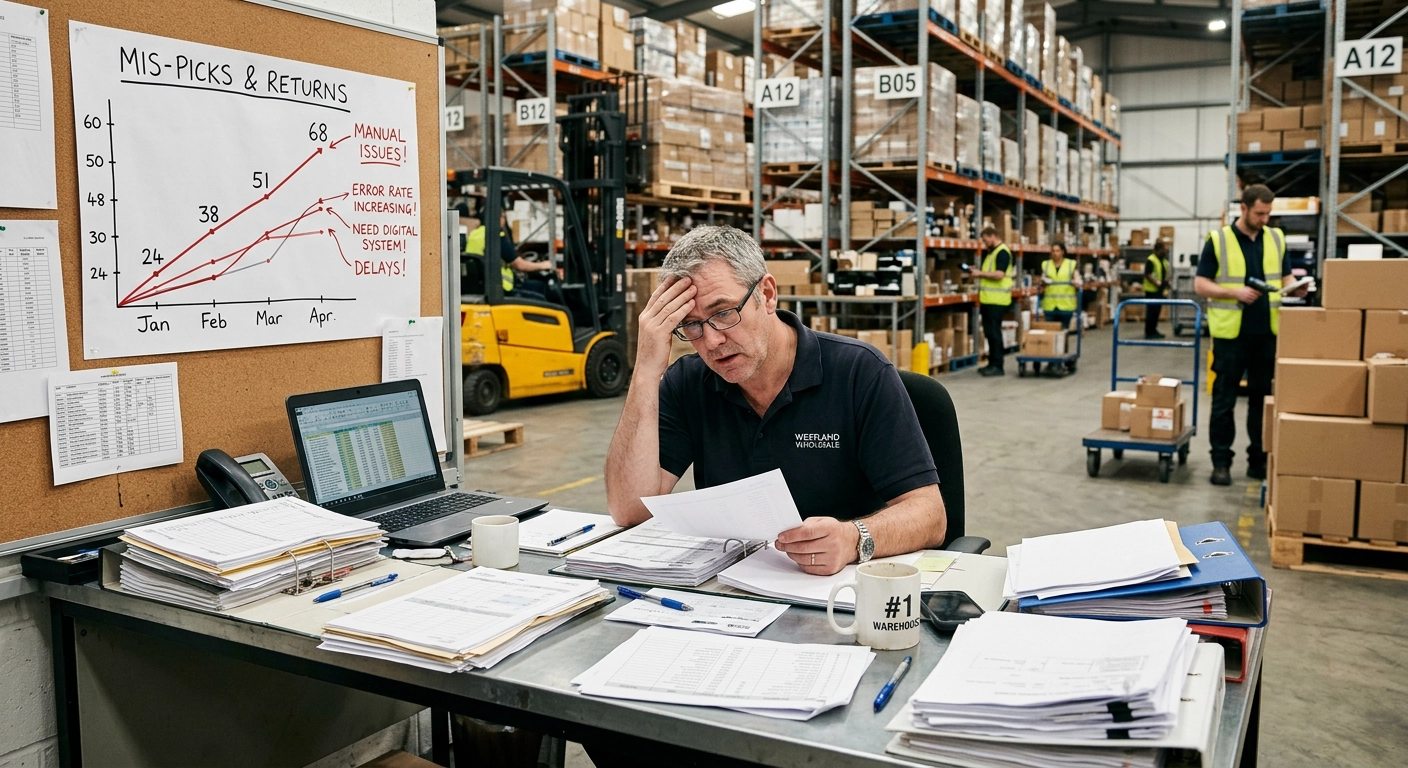
Warehouse productivity has a significant impact on customer satisfaction, profitability and the overall success of any wholesale or distribution business. Yet many warehouses still rely on guesswork, manual tracking or outdated systems to understand how effectively their teams and processes are performing.
Good productivity management isn’t just about scrutinising staff. It’s about identifying what helps people work better, what slows operations down and where improvements can create a safer, more efficient environment.
When businesses approach productivity in the right way, they reduce bottlenecks, speed up order fulfilment and empower their warehouse teams to work with greater confidence and less stress.
In this article, we’ll explore how your business can measure warehouse productivity effectively, which metrics are most useful and how the right systems can support your warehouse team without making them feel monitored or pressured.
Why measuring warehouse productivity matters
A warehouse is a fast-moving environment where hundreds or even thousands of daily actions – from picking and packing to goods-in processing – shape the customer experience. When processes run smoothly, orders go out faster, errors are reduced and stock remains accurate. When they don’t, delays, mispicks and rising operational costs quickly follow.
Measuring productivity helps businesses understand what is working well and what needs improving. It allows managers to identify inefficiencies, spot patterns and make informed decisions that benefit workflows and teams. Monitoring individual picking rates also help to identify potential training needs or spot where processes are not as efficient as they could be, modern productivity measurement emphasises process improvement, smart system use and supporting staff with the tools they need to succeed.
A business that understands its warehouse performance can plan better, operate with fewer disruptions and deliver consistently strong service to customers.
Productivity metrics that actually matter
There are many metrics warehouses can track, but not all carry the same value. The key is to focus on data that genuinely reflects operational efficiency, highlights improvement opportunities and helps warehouse teams feel supported rather than judged.
Order fulfilment speed
Fast and accurate order fulfilment keeps customers happy and reduces operational costs. Measuring how long it takes for an order to move from being placed to being dispatched gives businesses a clear view of how smooth their processes are. Delays often point to layout issues, manual bottlenecks or a lack of accurate stock visibility.
Picking accuracy
Picking errors can be expensive. They lead to returns, reshipments, wasted stock and lost customer trust. Measuring picking accuracy helps businesses understand whether errors stem from layout issues, unclear processes or simple lack of visibility – all of which can be resolved with better tools rather than extra pressure on staff.
Stock accuracy
Stock discrepancies slow down warehouses and cause frustration for both staff and customers. Knowing how closely physical stock matches system records is vital. Improving this figure usually comes from better system integration and process consistency rather than staff performance monitoring.
Goods-in processing time
If goods-in takes too long, the entire warehouse feels the impact. Slow receiving processes can lead to backlogs, stock delays and incorrect availability data. Measuring how quickly stock is processed and added to the system helps businesses improve flow and reduce pressure on warehouse staff.
Space utilisation
Warehouse space is expensive, so using it effectively is essential. Space utilisation metrics help warehouses understand whether certain SKUs take up too much room, whether fast-moving items are stored in the best locations and whether layout adjustments could reduce unnecessary movement.
All these metrics focus on improving processes, and, when used correctly, they highlight where systems and workflows can be strengthened – helping teams work more efficiently and comfortably.
Using technology to support productivity
Manual tracking makes it difficult to measure warehouse productivity accurately, and it often adds unnecessary stress to staff who already have demanding roles. This is where technology can make a meaningful difference.
A Warehouse Management System (WMS) provides clear, real-time insights into warehouse performance – making it easier to understand operational trends.
Real-time dashboards
Dashboards give managers a clear overview of how the warehouse is performing at any moment. They’re designed to highlight bottlenecks, track order flow and help managers plan workloads more effectively. When used well, dashboards reduce pressure by helping teams stay ahead of demand spikes and avoid reactive firefighting.
Picking route optimisation
One of the most effective ways to increase productivity is by removing unnecessary movement. Profit4’s warehouse optimisation tools analyse warehouse layout and product locations to generate efficient pick routes. This improves picking speed, reduces fatigue and lowers the chance of errors.
Automated stock updates
Real-time stock visibility reduces the time employees spend searching for items, correcting errors or resolving discrepancies. This directly supports productivity by simplifying day-to-day tasks and ensuring staff always have accurate information.
Barcode scanning
Barcode scanners reduce manual entry, speed up processing and improve accuracy at every stage – from goods-in to dispatch. This helps staff feel confident in their work and enables managers to measure productivity based on reliable data rather than assumptions.
Supporting your warehouse team
The most productive warehouses are those where staff feel supported, informed and confident in their roles. Productivity dips rarely happen because people aren’t trying hard enough – they happen because processes aren’t clear, tools aren’t fit for purpose or information isn’t accessible.
Clear communication is one of the strongest foundations. When teams know what the priorities are for the day, which orders need immediate attention or where stock shortages may arise, they can organise themselves more effectively. Daily stand-ups or brief check-ins help everyone stay aligned.
Training also plays an important role. As technology becomes more central to warehouse operations, staff need the confidence to use new systems and devices. When employees understand how tools like barcode scanners or WMS dashboards help reduce their workload, adoption becomes much smoother. Over time, this builds a team that works faster and with fewer errors because the tools genuinely make their work easier.
Employee well-being should never be overlooked, either. Tired or overworked staff are more likely to make mistakes, so managing workloads fairly, offering ergonomic equipment and creating a supportive culture all contribute to stronger productivity.