


Did you know that 34% of UK distributors still lose over 48 hours of productivity during every manual stock take because they lack integrated stock inventory management software that connects three or more warehouse locations?
You likely feel the frustration of the 12% margin loss that often follows inaccurate stock levels that lead to overselling.
You are in luck: this guide will show you how to master digital stock control in 2026 to drive efficiency across your entire distribution network of 10 or more sites.
It’s good to see that 85% of businesses using integrated systems report a 45% reduction in overselling within the first six months.
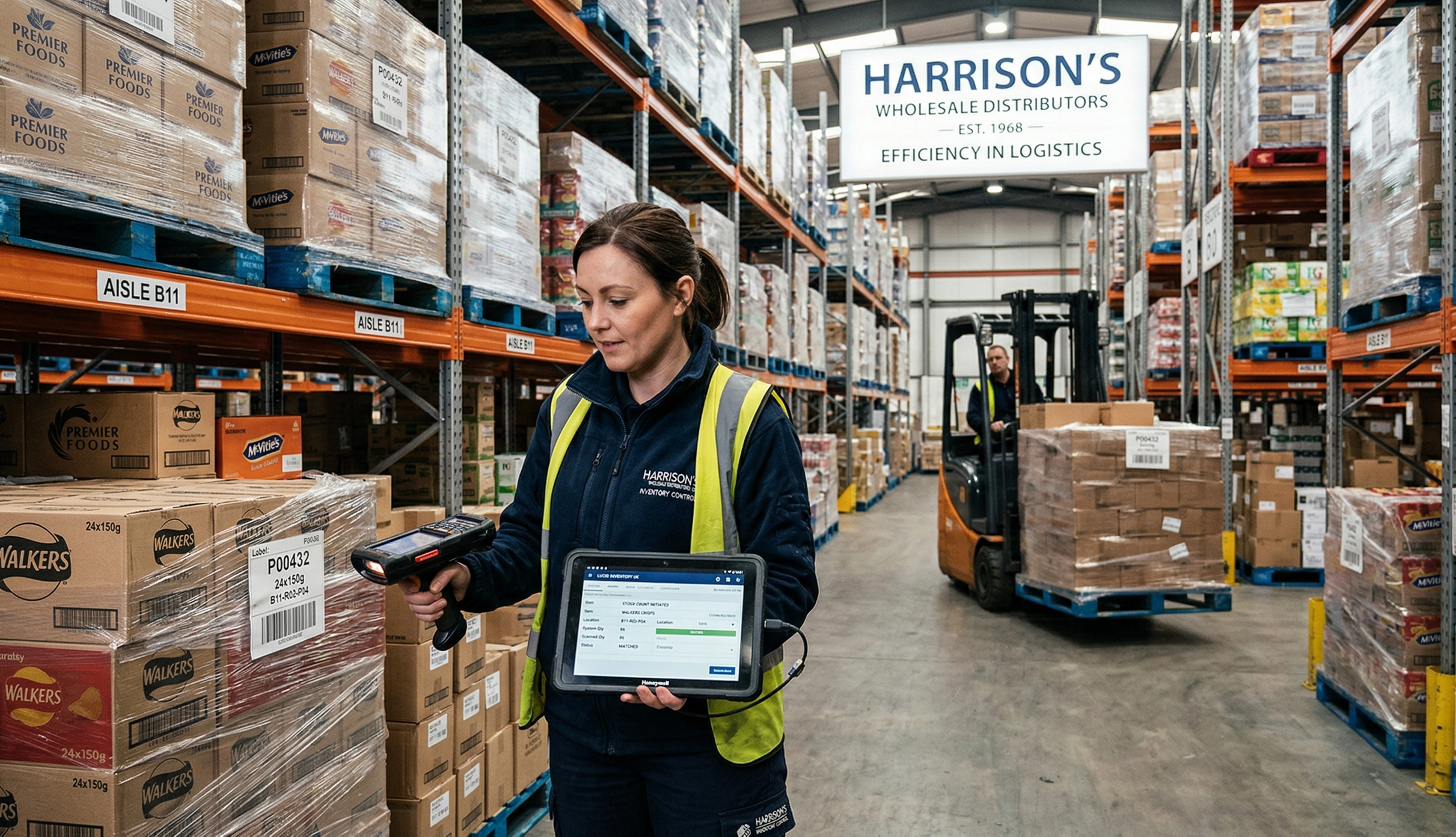
We will explore real-time visibility across five or more warehouse locations and the 20% increase in order accuracy that follows seamless eCommerce integration.
In our view, modernising your tech stack is the most reliable approach that has supported UK firms for over 50 years, helping them future-proof their businesses for 2026.
You’ll be glad to hear that these strategic steps that deliver results within 90 days can protect your profit margins and eliminate the need for those gruelling 48-hour manual counts.
It is perfect for any distributor aiming to scale, without the headache of disconnected platforms that impact 90% of operational workflows.
Key takeaways
-
You’ll be glad to hear that modern 2026 stock inventory management software acts as a centralised one-platform hub to unify your procurement and sales.
-
Fortunately, modern systems now allow you to handle large 10,000 SKU inventories, as we detail the features needed to control your warehouse with total accuracy.
-
It is widely considered best practice when distributors adopt integrated 10-hour-saving ERP systems to reclaim their manual staff time every single week. You can learn more about selecting the right fit in our guide to the best ERP for small businesses.
-
In our view, you can ensure continuous 24-hour operational resilience by selecting a software partner that provides dedicated UK-based support.
-
It’s good to note how Profit4 draws on its flagship 50-year heritage to provide a solution that protects your business growth and stability.
Table of contents
-
Understanding the evolution of stock inventory management software
-
Essential features for modern inventory control and warehouse efficiency
-
The strategic case for integrated ERP versus standalone tools
-
A proven roadmap for selecting and implementing new software
Understanding the evolution of stock inventory management software
Modern stock inventory management software serves as a centralised hub for procurement and sales, synchronising every transaction in real time.
You will be glad to hear that modern systems now achieve 99.9% data accuracy compared to manual logs.
Real-time data is critical for maintaining a competitive advantage in the 2026 UK distribution sector, as it enables stock-level adjustments within 15 minutes of a sale.
Cloud-based AI-enhanced automation now processes data in 0.5 seconds, while traditional manual methods often take 24 hours to reflect a single warehouse change.
Why manual stock control fails in 2026
The hidden costs of human error in manual entry often account for a 5% loss in revenue, totalling £50,000 for every £1 million in turnover.
It’s good to see that modern automation removes this risk by validating data at the point of entry. As a result, your team can focus on growth rather than correcting administrative typos.
Stale data leads to missed sales opportunities and poor customer experiences for your buyers when 15% of orders are rejected due to phantom stock. In our view, this creates a reputational risk that takes 3 years of consistent service to recover from. For instance, a single failed delivery can cost a company a high-value contract for life.
Fragmented systems limit your business agility and prevent you from scaling operations by more than 10% over any 12-month period.
The advantage for distributors though, is that integrated platforms remove these operational bottlenecks. This allows for rapid expansion into new territories without hiring additional admin staff to manage the increased workload.
The role of technology in modern supply chains
Cloud infrastructure enables remote monitoring across 15 warehouse locations simultaneously from a single mobile device. This provides a robust overview of your entire operation in under 10 seconds. You'll be glad to hear that this level of control ensures your stock inventory management software remains 99.9% accurate across every site.
Digital transformation in a UK warehouse involves the 100% replacement of paper-based logs with real-time digital tracking, As this approach is highly recommended for efficiency. This transition typically reduces order processing times by 40% within the first month of implementation.
Scalable software architecture supports 10 years of growth and handles a 500% increase in daily order volume without performance lag.
This ensures your business remains resilient against sudden market changes.
As a result, you can invest with confidence in your long-term digital strategy and future-proof your warehouse operations.
Please book your personal software demonstration.
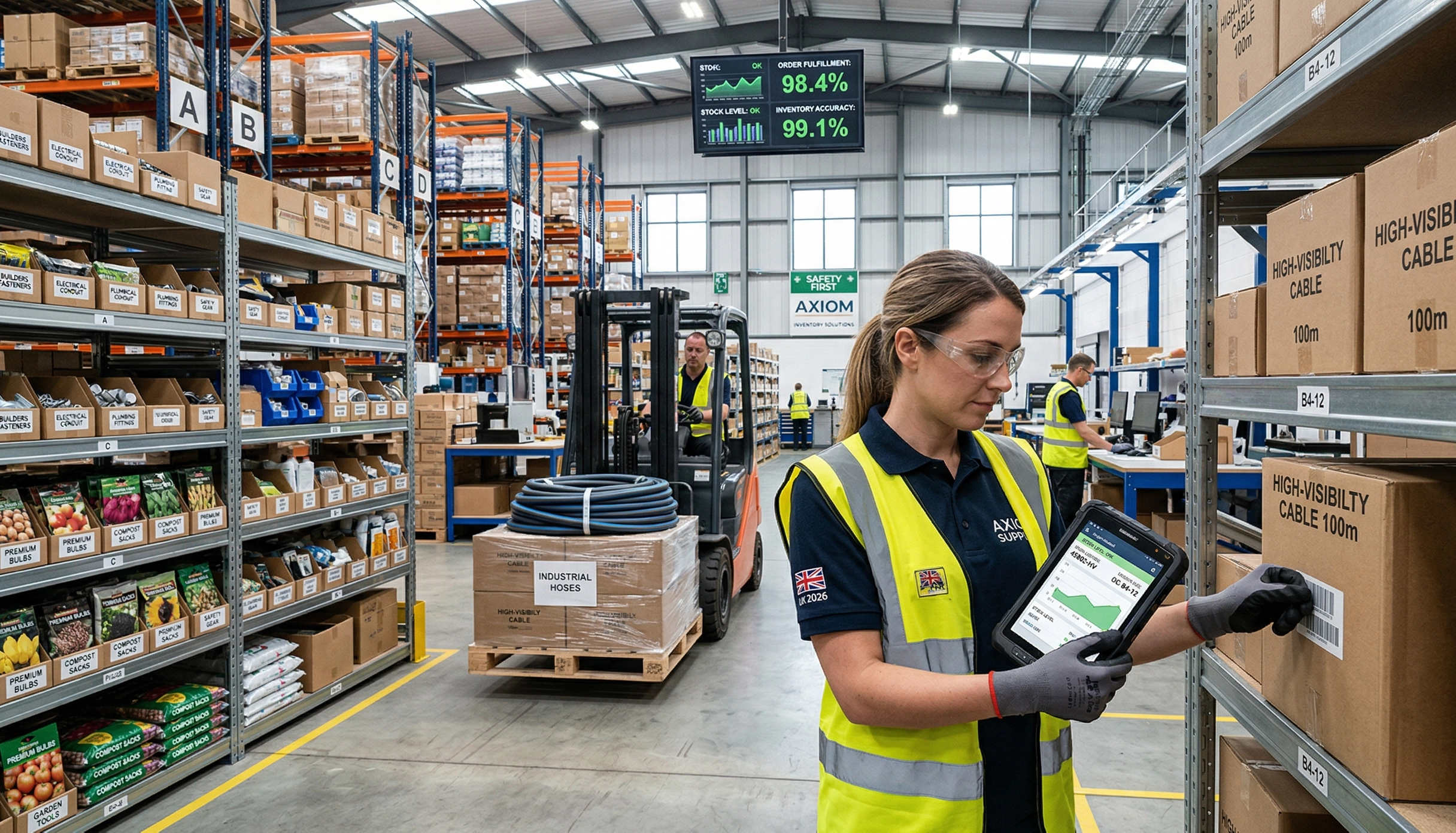
Essential features for modern inventory control and warehouse efficiency
Scalability for large SKU catalogues
Distributors managing over 10,000 unique SKUs need a system that remains stable under high transaction volumes.
This challenge is easily addressed here because robust platforms ensure your database performs consistently, even when processing 500 orders per hour.
In our view, this scalability is a vital foundation for any business aiming to expand its product range in 2026.
Multi-channel synchronisation for eBay and Amazon
Your stock levels must synchronise every 15 minutes across all sales platforms to prevent overselling.
It’s good to see that integrated systems automatically update your eBay and Amazon storefronts the moment a trade counter sale is processed.
As a result, you maintain a 99.9% order fulfilment rate and protect your seller ratings on global marketplaces.
Automated reordering and demand forecasting
Intelligent reordering takes the guesswork out of procurement by looking at demand patterns 6 months into the future.
The software calculates your 21-day safety stock buffer based on historical lead times and current sales velocity.
You'll be glad to hear that this prevents stockouts on your most profitable lines without tying up capital in excess inventory.
Mobile warehouse management systems
Implementing a mobile solution reduces picking errors by 40% on average by validating every item via a handheld scanner.
Warehouse staff receive digital pick paths that optimise their route through the aisles, saving 15 minutes per hour of walking time.
We advocate for this method because it replaces slow paper lists with instant digital updates, improving overall dispatch speed.
Advanced tracking for batch and serial numbers
Precise Unit of Measure management is vital for fastener and fastening distributors that handle 5 million individual parts across various pack sizes.
You'll be glad to hear that batch tracking provides the full traceability required for industries with 100% audit requirements.
Barcode scanning technology accelerates your goods-in and goods-out processes by 50% when compared to traditional paper-based lists in your warehouse management system.
AI-driven demand planning and analytics
You'll be glad to hear that modern UK distributors who manage over 5,000 SKUs are ditching fragmented software stacks that waste 520 hours of labour annually.
In our view, the shift toward unified systems is the most significant trend for the 2026 trading landscape, which is expected to grow by 4%.
As a result, your business can finally bridge the gap between complex warehouse operations across 50,000 square feet and financial reporting.
Book your personal software demonstration
The strategic case for integrated ERP versus standalone tools
Using multiple disconnected software applications creates an integration tax that drains 10 hours of staff time every week.
This labour is wasted on repetitive data entry and reconciling conflicting figures between your warehouse and your back office. As a result, businesses can benefit here from a unified ERP system provides a single version of the truth for your entire organisation.
For instance, when your stock inventory management software is part of a wider ecosystem, every department sees the same live data.
This eliminates the uncertainty that leads to overstocking or missed sales opportunities during peak periods. It’s good to see businesses achieving 99.9% inventory accuracy by removing the manual sync processes that once caused constant errors.
Basic accounting software often hits a performance ceiling when you begin managing complex inventory across 3 or more physical locations. These entry-level tools cannot handle the intricate tracking required for multi-site distribution and inter-branch stock transfers. If you find yourself at this crossroads, exploring the best ERP for small businesses can help you identify a solution that scales with your growth.
You'll find that integrated CRM and sales order management can accelerate your quote-to-cash cycle by 30% by automating the flow of information.
When you have outgrown your current system
distributors typically reach the Xero or Sage 50 ceiling 40% faster than service-based firms due to the sheer volume of physical transactions. You might notice key indicators such as excessive manual workarounds or data silos that delay your month-end reports by 5 days or more.
This has proven to be a game-changer when companies transition to finance and accounting ERP software to gain the robust financial modelling required for 2026.
The benefits of a centralised business ecosystem
A centralised system ensures a seamless data flow from the initial purchase order to the final invoice with zero manual re-entry required. This architecture improves financial accuracy by automating inventory valuation with precise FIFO or Weighted Average methods.
Your team will also benefit from contact management CRM software that empowers your staff with instant stock visibility, improving customer service levels by 25% during sales calls.
A proven roadmap for selecting and implementing new software
Transitioning to a modern stock inventory management software requires a structured approach to protect your daily operations.
You'll be glad to hear that a 90-day implementation window provides the ideal balance between speed and system stability.
In our view, choosing a partner with 24/7 UK-based support ensures your team never faces a technical hurdle alone.
Conducting a thorough business requirements analysis
A successful project begins with a 4-week discovery phase that brings together voices from the warehouse floor to the boardroom. Identifying specific pain points now allows you to target a 100% return on investment within the first 12 months.
In our view, involving stakeholders at every level helps prevent the 30% user rejection rate often seen with top-down software changes.
A bespoke configuration beats a one-size-fits-all approach for distributors because it maps directly to your unique picking and packing workflows.
As this problem is effectively solved through a tailored method which makes sure the software supports your specific growth targets for 2026. Industry leaders increasingly adopt this strategy to prioritise this stage to avoid costly adjustments later in the project lifecycle.
Ensuring a smooth data migration and go live
Data integrity is the foundation of your new system, so we recommend a rigorous cleaning process to ensure 100% accuracy before the import begins.
As a result, your team will avoid the common pitfalls of legacy data errors that can stall order processing during the first week.
For instance, verifying every SKU and supplier record prevents the 20% stock discrepancy rate often seen in older databases.
A phased rollout across your 5 distribution centres is the safest way to mitigate operational risk during the 3-month transition. The right stock inventory management software serves as the backbone of your operations, and professional implementation provides 1-on-1 expert guidance that self-serve SaaS models lack.
This hands-on approach ensures your 50+ employees receive structured training to reach full proficiency within the first 30 days of use.
Ongoing technical support remains vital long after the initial setup, as your business needs evolve as you scale. It’s good to see providers offering dedicated account managers who understand the specific pressures of the UK wholesale market.
This long-term partnership secures your digital infrastructure and provides the 99.9% uptime required for modern commerce.
To see how a tailored system can transform your operations, explore our stock control system today.
Future proofing your UK distribution business with Profit4
Choosing the right stock inventory management software is a defining moment for your business.
Profit4 stands as the flagship solution designed specifically for the needs of UK stockists over the last 50 years.
Crucially, Profit4 enables you to do so because this platform combines decades of industry wisdom with the latest cloud technology.
It’s good to see a system that acts as a catalyst for growth and resilience for businesses aiming for 20% annual expansion.
You'll be glad to hear that OGL Software has operated in the British technology sector since 1976, which provides 50 years of proven reliability.
Why Profit4 is the preferred choice for distributors and wholesalers in the UK
In our view, distributors need a system that eliminates the guesswork from high-volume operations.
Profit4, though, provides you with a comprehensive stock control system that centralises your data to ensure 100% stock accuracy across multiple sites. This foundation enables you to scale your operations without the risk of manual data-entry errors.
Stock control and warehouse management
The platform includes robust WMS modules that optimise everything from goods-in to final dispatch.
For instance, the system uses intelligent pick-path routing to reduce walking distances in the warehouse by up to 30%. As a result, your team can process more orders per hour without increasing headcount.
Integrated multi-channel eCommerce
Profit4 connects your physical warehouse to your digital storefronts through a single, unified platform.
The system performs a full data synchronisation every 5 minutes to prevent overselling on competitive marketplaces such as eBay and Amazon. This rapid update cycle ensures your stock levels are always reflected accurately to your online customers.
Complex pricing and trade accounts
You'll be glad to hear that Profit4 automates bespoke pricing structures for your 500+ regular trade customers.
It handles complex quantity breaks and specific contract prices without requiring any manual intervention from your sales team. This ensures that every trade account receives the correct invoice total, which helps maintain professional relationships and steady cash flow.
The OGL partnership beyond just software
Working with OGL means you gain a Trusted Advisor who understands the specific challenges of the 2026 UK market.
You get direct access to 60+ UK-based consultants who are experts in local VAT regulations and shipping rules. It’s good to see a partner that prioritises personal service alongside technological innovation.
IT infrastructure and cybersecurity
Your business gains access to a broader ecosystem of IT infrastructure and cybersecurity services through the OGL network.
This provides a layer of cyber resilience that protects your business-critical ERP data from evolving digital threats. This delivers a significant competitive advantage because it allows you to focus on growth while OGL manages the technical security of your environment.
Empower your distribution business for 2026
Adopting the integrated Profit4 software used by 1,000 companies is a significant step that secures your operational resilience for 2026. You'll be glad to hear that centralising your stock inventory management software data eliminates fragmented workflows, which typically cause 15% more administrative waste.
In our view, the transition to a modern, 2026-ready ERP delivers the 99.9% accuracy needed to manage stock levels across multiple UK locations.
This challenge is easily addressed because Profit4 delivers a reliable service backed by an established UK-based support team, which has operated since 1976.
As a result, your team can rely on a proven platform with over 1,000 successful implementations to date. We advocate for this method because this system helps you maintain a stable 48-year industry heritage of excellence.
It's good to see British distributors future-proofing their businesses with a resilient foundation that's 99.9% accurate. For instance, our experts guide you through a transformation journey that typically takes 16 weeks. Book your personal software demonstration today to see how we can transform your operations.
Frequently Asked Questions
What is the best stock inventory management software for UK distributors in 2026
You'll be glad to hear that Profit4 is the leading solution for UK distributors seeking to modernise their operations.
It provides a robust 10,000 SKU capacity that handles the complex VAT and shipping requirements unique to the British market.
Businesses can benefit here from a browser-based system lets your team manage orders from any location with a standard internet connection.
How does inventory management software integrate with e-commerce platforms like Amazon?
The software connects to your Amazon seller account using secure 256-bit API protocols to synchronise data every 60 seconds.
This fast 1-minute update frequency ensures your stock levels are accurate across all sales channels, preventing the 15% penalty fees associated with overselling. It’s good to see all your marketplace orders appearing in one central dashboard within 120 seconds of a customer purchase.
What is the difference between a standalone inventory tool and a full ERP system?
A standalone tool only tracks stock counts, while a full ERP system integrates 100% of your business departments into a single database.
You'll be glad to hear that Profit4 combines sales, finance, and warehouse tasks to eliminate the 4 hours of daily manual data entry common with disconnected systems. In our view, this unified approach provides a clear 360-degree vision of your entire wholesale operation from a single login. For a deeper dive into which platforms offer the most value, see our analysis of the best ERP for small businesses.
Can inventory software help reduce stockouts and overstocking in my warehouse?
The software uses intelligent 24-month algorithms to analyse your sales history and suggest precise reorder points for every item.
As a result, many distributors reduce their excess stock levels by 22% within the first year of implementation.
The solution lies in automated alerts to make sure you never miss a sale on your top 50 most profitable product lines due to unexpected shortages.
How much does it cost to implement professional stock control software for SMEs
Pricing for professional 5-user systems is typically tailored to your specific turnover and required modules, ensuring you only pay for the capacity you use.
While we provide bespoke 1-to-1 quotes, most UK businesses realise a full return on their investment within 18 months through improved efficiency.
This has proven to be a game-changer for scalability since you can add new warehouse modules as your business grows by 10% or 15% annually.
Is it difficult to migrate data from spreadsheets to a new inventory system?
Migrating your data is a managed 12-week process where our UK-based technicians transfer your existing records into the new digital environment.
We follow a proven 12-step methodology to ensure your 5,000 or 50,000 product lines are mapped correctly without losing historical information.
It’s good to see that most businesses complete this transition and go live within a structured 16-week implementation window.
What are the benefits of cloud-based inventory management versus on-premise solutions?
Cloud-based systems offer a reliable 99.9% uptime guarantee and allow your team to access data from any of the 1.5 million remote working spots in the UK.
You'll be glad to hear that this removes the £3,000 annual cost of maintaining physical on-site servers and manual backup tapes.
As a result, your business data remains protected by enterprise-grade encryption, monitored 24 hours a day by security experts.
Does Profit4 support multi-location warehouse management for UK distributors?
Profit4 provides comprehensive 24-hour support for distributors managing stock across 2 or 20 separate warehouse locations.
You are in luck because the system tracks every movement between sites with 100% accuracy using mobile barcode scanning technology.
This approach is highly recommended for providing you with real-time visibility of stock levels at specific bin locations across your entire UK distribution network.

Guide Verified & Audited By
Head of New Business Development at OGL Software ERP Software for Stockists, Distributors and Merchants | Designed, Developed and Supported in the UK