Improve Profits in the Janitorial Industry
The cleaning and janitorial stockist and distribution industry is competitive but we have some top tips to help increase sales and boost profits.

With 50 years' experience in the wholesale and distributor sector, we have put together a 14-page guide on the key facts about ERP. Download yours for free.





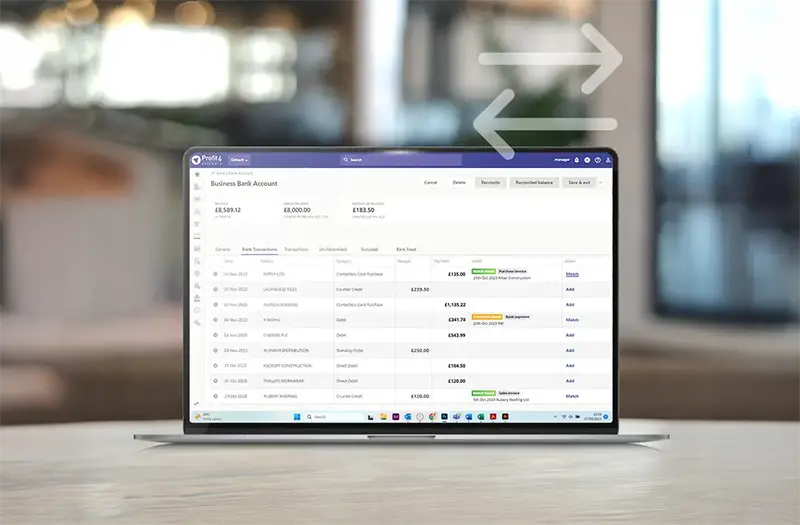
For wholesalers and distributors, keeping track of payments is a never-ending task. With multiple customers, different payment methods and fluctuating invoice volumes, guaranteeing that every payment received is correctly matched against the right invoice can quickly turn into a full-time job. On top of that, human error can creep in, leaving you with discrepancies that take hours to unpick.
This is where payment reconciliation software comes in. By automating the process of matching payments with invoices, businesses can not only save time but also improve financial accuracy and cash flow visibility. In an industry where margins are tight and efficiency is everything, these gains can make a huge difference.
Payment reconciliation software automates this matching process, taking much of the manual work out of your finance team’s hands. It connects your business bank account to your accounting or ERP system, automatically pulling through payment data and aligning it with the correct invoices.
Instead of manually trawling through bank statements, the system uses rules and machine learning to identify matches. For example, if a payment comes in for £500 and there’s an outstanding invoice for the same amount from the same customer, the software will automatically reconcile the two. If there are discrepancies – such as a customer paying slightly less due to bank fees – the system flags it for review rather than leaving it unnoticed.
By handling the bulk of the matching automatically and only asking humans to step in when something doesn’t add up, the software dramatically reduces admin hours while improving accuracy.
For many wholesalers, manual reconciliation remains the default. But this approach has several downsides:
In short, sticking with manual reconciliation is not just inefficient – it can actively slow down growth and make it harder for businesses to stay competitive.
So, what makes automated reconciliation such a game-changer for wholesalers and distributors? The benefits stretch well beyond saving time.
First and foremost, it improves accuracy. With software automatically checking and aligning data, there’s far less room for human error. This ensures your financial records are always reliable and audit-ready.
Secondly, automation delivers real-time cash flow visibility. Instead of waiting until the end of the week or month to know where you stand, businesses gain up-to-the-minute insights into which invoices are paid, which are pending and where discrepancies lie. This is invaluable for managing credit terms, supplier relationships and investment decisions.
Finally, reconciliation software supports scalability. As your order volumes grow, the workload no longer balloons in the same way it would with manual processes. Whether you’re handling 100 payments a week or10,000, the system scales with you – freeing up your finance team to focus on strategic tasks rather than repetitive admin.