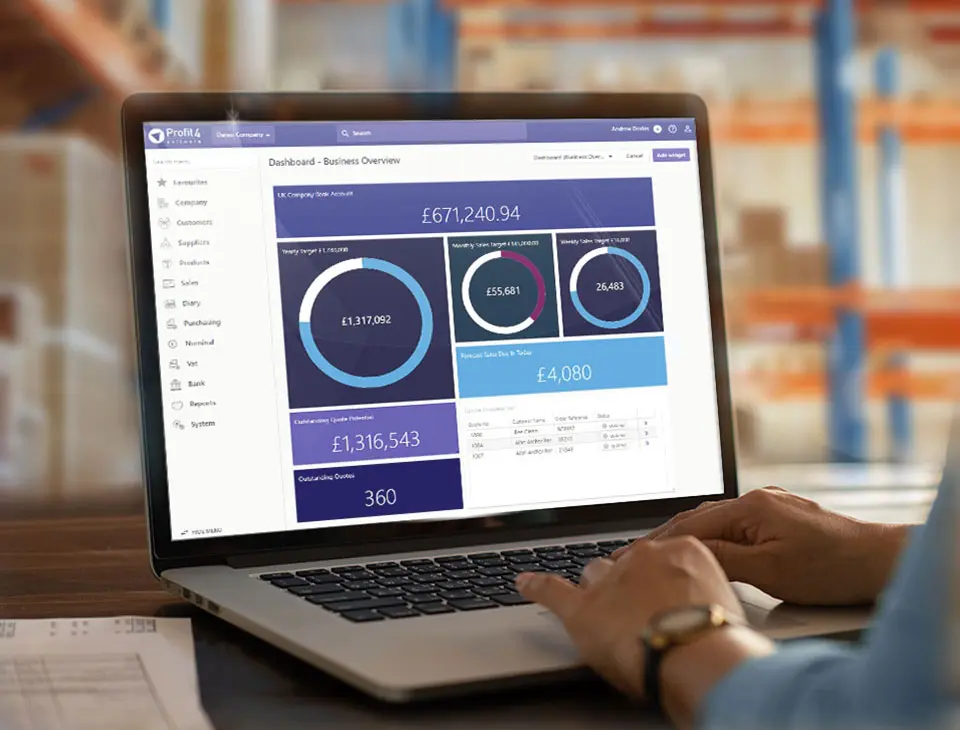
The best ERP for small businesses
A complete guide to ERP Software and why Profit4 ticks every box for UK wholesalers and distributors

With 50 years' experience in the wholesale and distributor sector, we have put together a 14-page guide on the key facts about ERP. Download yours for free.





You understand that high administrative costs and slow response times are no longer a sustainable part of doing business in a competitive market but let's start with some facts:
Reliance on Manual Workflows: Nearly all (98%) of UK wholesalers still utilize some level of manual processes in their operations.
Ineffective Operations: Approximately 27% of UK wholesale managers explicitly cite their current manual processes as ineffective for managing business operations.
Productivity Time Sink: UK businesses collectively waste an estimated 100 million hours per year—the equivalent of 50,000 full-time employees—on manual admin tasks like procurement, supplier management, and freight.
Wasted Hours: Research indicates that 92% of employees waste an average of 8 hours per week (one full working day) simply trying to locate the right data to serve customers.
In this guide, you'll discover how to identify and resolve these hidden burdens to achieve lower operational costs and faster shipment cycles. Your wholesale business likely manages a complex web of suppliers and customers across the country while juggling thousands of individual SKUs.
Having been in business 50 years, we know these administrative bottlenecks often create a ceiling for growth by causing inaccurate stock levels and missed sales. As technology partners, we advocate for integrated ERP solutions that provide a robust 99.9% uptime foundation for your entire office and warehouse operations.
Read on to see our outline to the strategic steps to move from fragmented workflows to a secure, central data source, giving real-time supply chain visibility.
Key Takeaways
Calculate your own estimated yearly manual administration costs with this formula:
The Formula:
(Number of Employees) x (Average Hours per Week on Data Entry) x (Average Hourly Rate) x (Working Weeks per Year) = Annual Labour Cost
For a UK wholesaler, with 4 admin team members, spending 5 hours per week each manually entering data, on a hourly rate of £25........that’s £24,000 per year wasted on data entry.
A businesses order processing inefficiencies stem from legacy workflows reliant on physical paperwork or disconnected spreadsheets. While your team work hard, 50% of UK businesses still struggle with re-keying data between disparate systems. Our sales order management system provides the automation needed to eliminate these bottlenecks. According to marketsandmarkets.com, automated systems routinely achieve 99% to 99.9% accuracy, essentially reducing human error by up to 90% compared to manual entry.
Administrative drag is a silent drain on your operational capacity. It forces skilled staff to spend hours on repetitive tasks instead of driving new business.
In our view, these legacy habits act as a friction point that slows down every department from the warehouse to the finance office. Fortunately, modern ERP solutions provide a structured path toward digital maturity.
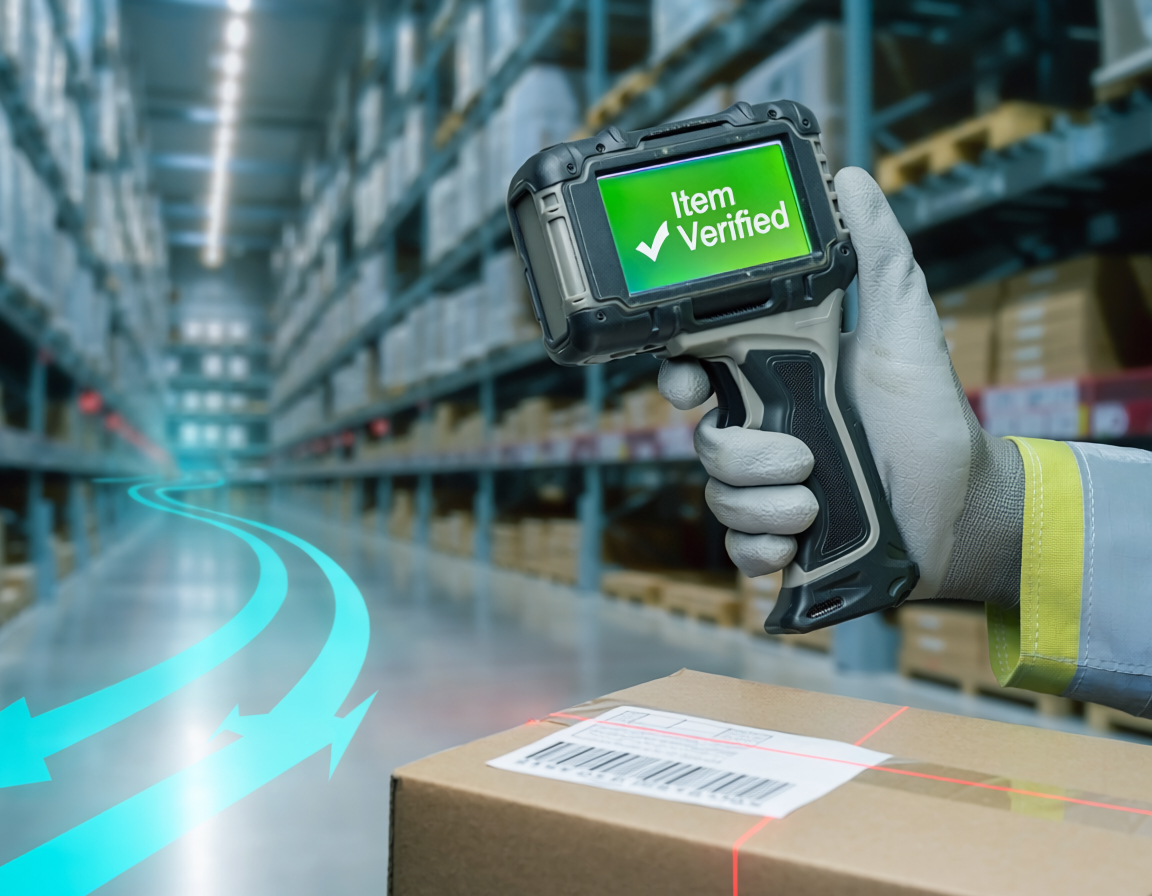
A single-digit error in a complex B2B order can trigger a cascade of operational failures. Incorrect SKU entry leads to warehouse picking mistakes and costly returns that erode your profit margins.
We know that automated systems routinely achieve 99% to99.9% accuracy. The errors from manual data entry create hidden costs, such as corrected invoices, inventory re-work and the need for expedited shipping to resolve customer disputes. It becomes impossible to maintain you customer satisfaction as your business grows and compounds these errors.
When an order is entered incorrectly, your business pays for the mistake three times. You pay for the initial processing, the return logistics, and the subsequent replacement delivery.
As technology partners, we advocate for a modern, automated business software suite to remove the human element from repetitive data transfers.
Manual processes create a ceiling on the volume of orders a team can handle before performance plateaus. If your staff is at 100% capacity just managing current paperwork, you cannot scale without hiring more expensive administrative heads.
Scaling a business on manual foundations is strategically unsustainable in the modern UK distributor landscape. It creates a growth trap where increased sales lead to increased errors and customer dissatisfaction.
Your business requires robust order processing to maintain a professional reputation and meet customer expectations. We help you unlock capacity by automating the flow of data from your sales channels directly into your stock system.
Best practice dictates that order entry should be a one-touch process. By removing the need for manual intervention, you empower your team to focus on strategic growth and high-value account management.
Book a demo of our ERP software to see how we can transform your business operations.
UK distributors can lose, on average, 5.87% of revenue and 15 hours per worker per week due to fragmented administrative tasks. Many businesses still rely on paper-based systems or disconnected spreadsheets to manage their daily sales. These manual order processing inefficiencies create a bottleneck that prevents rapid scaling and reduces profit margins. Transitioning to a unified digital platform is the only way to ensure long-term operational resilience.
In our experience, the primary issue for UK Wholesale is the "silo effect" where departments operate in isolation. Sales, finance, and warehouse teams often lack access to the same real-time data, leading to conflicting information.
A delay of just four hours between receiving an order and it appearing on a picking list can result in missed shipping deadlines. This lag is often caused by the need for manual data entry across multiple disparate software packages.
Customers now expect 100% visibility regarding their order status and tracking information from the moment of purchase. B2B wholesale customers such as yours, expect the same information and tracking on online orders that retail giants like Amazon deliver. If your business cannot provide this, it leads to an influx of "where is my order" enquiries that overwhelm customer service teams.
Manual stock checks are another significant drain on resources, often requiring staff to physically verify shelves before confirming an order. With 50 years of experience working with UK stockists and distributors, we often see that these manual checks deliver at best 95% accuracy compared to the 99.5% - 99.9% accuracy of automated systems. The fact is, manual data input is likely to result in human error, customer dissatisfaction and loss of revenue.
Disconnected systems frequently trigger "he said, she said" scenarios between sales and finance departments. These internal disputes often stem from outdated credit limits or incorrect pricing data that hasn't been synchronised across the business. Fortunately, integrated systems allow forseamless communication across multiple departments, with real time visibility and 99.9% uptime. Distributors and wholesalers should also implement contact management CRM software to ensure every team member sees the same customer history.
Understanding the strategic benefits of business process automation is essential for moving beyond these communication barriers. As technology partners, we advocate for a single source of truth that eliminates the need for redundant internal emails.
Manual workflows create a dangerous lag between a sale being recorded and stock levels being updated. This delay often leads to overselling, which damages customer trust and results in costly refund processing.
Best practice dictates that stock levels should update instantly to prevent unnecessary stockouts during peak periods. Implementing a robust stock control system provides the live inventory data required to manage complex supply chains.
Our solutions ensure your data remains protected while providing the transparency needed to thrive. Discover how our sales order management system can eliminate these bottlenecks for your business.
Manual order processing inefficiencies often stem from a lack of synchronisation between sales channels and the warehouse. While manual entry takes an average of 15 minutes per order, automated systems achieve the same result in under 2 seconds.
Manual acknowledgement relies on staff availability, whereas automation provides immediate confirmation to the customer. This speedensures that UK distributors remain competitive in a market where 88% of B2B buyers expect real-time responses.
Manual spot-checks typically catch only 75% of data entry errors, leaving a significant margin for costly shipping mistakes. Automated validation checks every field against pre-defined rules, ensuring 100% data integrity before the order reaches the picker. A widely accepted industry statistic states that removing human touchpoints reduces the risk of incorrect SKU selection by 95%, turning picking error rates from 4% to less than 0.01%.
Customers receiving manual updates often face information blackouts while waiting for staff to check stock levels. In contrast, automated updates provide a transparent journey from the moment the order is placed.
Best practice suggests that proactive communication reduces customer service enquiries by up to 40%. This reliability builds long-term loyalty and positions your business as amodern, customer-focused partner.
Legacy on-premises systems often struggle with the processing overhead required for high-volume periods. Cloud-based ERP solutions offer a robust 99.9% uptime, allowing you to scale operations without investing in additional physical hardware.
Batch processing creates a 24-hour lag in business intelligence, meaning decisions are based on yesterday's figures. Real-time data is essential for competitive UK distributors to ensure stock levels are accurate across all platforms.
Fortunately, Profit4 provides instant updates across all integrated modules, reflecting every sale immediately in your ledger. This visibility allows managers to respond to stock shortages or sales spikes within minutes.

Manual systems fail during peak periods like Black Friday or seasonal peaks, because human capacity cannot scale as fast as order volume. During these times, manual order processing inefficiencies lead to backlogs that can take weeks to clear. As technology partners, we advocate for systems that grow with your order volume. We suggest reviewing our ERP case studies to see how automation handles surges in demand while maintaining a resilient core platform for your business.
Book a demo to see how our automated systems can transform your distribution business.
Research indicates that 60% of B2B distributors still rely on legacy systems requiring manual data re-entry. UK wholesalers often operate through fragmented workflows where orders move between spreadsheets and paper files. These manual order processing inefficiencies lead to a 25% increase in administrative costs for the average mid-sized firm. As technology partners, we advocate for a structured transition to automation to recover these lost margins.
We have a vast 50 years’ experience and have built out the process with hundreds of wholesalers. The most successful transitions follow a six-step strategic framework. Initially, you must conduct a thorough audit of the current order to dispatch journey to see where time is lost. ITIL standards suggest that process mapping is the first step to automation. Best practice involves identifying specific touch points where manual intervention is highest, such as re-keying sales orders into finance software.
Once you understand the gaps, evaluate software that offers seamless ERP integration. Finally, plan for data migration and staff training to ensure high adoption rates across 100% of your workforce.
Our team provides fast response times, and you will have your own delivery and implementation team behind you to ensure your transition remains on schedule. This structured approach minimises disruption while maximising the return on your technological investment.
Documenting every step an order takes from the initial enquiry to the final delivery is essential for operational clarity. You should identify bottleneck desks where physical paperwork tends to pile up.
In our view, this visibility allows you to see exactly where human error or delay enters the system. Mapping these steps reveals the low-hanging fruit for immediate digital improvement within your warehouse.
Having developed and implemented software for stockists and distributors for over 45 years, we have seen how these hidden delays erode customer trust and reduce repeat business. A clear map serves as the blueprint for your future-proof digital infrastructure.
Request a tailored demonstration of our order management solutions today.
Small businesses lose up to 120 hours of their productivity to administrative repetition each year. Your growth depends on how quickly you move stock from the warehouse to the customer.
Lingering manual order processing inefficiencies act as a ceiling on your potential revenue. Profit4 provides the digital framework to remove these barriers and scale your operations.
Profit4 stands as the definitive ERP solution for UK wholesalers and stockists looking to modernise their workflow. The software acts as a central nervous system, connecting every department to ensure data flows without friction or delay.
Profit4 automates the entire sales journey to ensure your team focuses on high-value tasks instead of data entry. Our sales order management system eliminates errors by synchronising multi-channel orders in real time.
This integration extends to your finance and accounting software to maintain ledger accuracy.
You also benefit from 100%UK-based support from consultants who understand the specific pressures of the UK distributor and wholesale market. Established in 1976, OGL Software is 100% UK based including our Profit4 development and support teams; a critical consideration for UK SME wholesalers looking for a seamless transition to automated workflows.

Data becomes a strategic asset when you utilise advanced reporting and analytics to scrutinise your performance. Profit4 allows you to identify your top 10% most profitable customers and high-margin customers product lines instantly.
Profit4 has refined these tools to help you predict stock requirements and understand seasonal peaks and troughs. AI insights also enable further interrogation of business-critical data to aid decision-making.
Eliminating manual order processing inefficiencies is the first step toward building a resilient, scalable business. By partnering with OGL, you gain the competitive advantage of a future-proofed system designed for long-term success.
Industry data suggests UK distributors often lose up to 20% of their operational capacity to manual order processing inefficiencies. Transitioning to automated workflows reduces entry errors by 95% and unlocks significant growth.
Best practice involves moving away from fragmented legacy systems to a unified Profit4 ERP solution across all your key operational departments to ensure a reliable central source of truth. Subsequently, this transition allows your team to focus on customer relationships rather than re-keying data from manual spreadsheets. Your journey toward a more efficient and profitable future starts with a single strategic decision. We're ready to help your business thrive and remain competitive for the next 50 years.
Book a consultative demo to see how OGL Software can transform your distribution business.

Head of New Business Development at OGL Software ERP Software for Stockists, Distributors and Merchants | Designed, Developed and Supported in the UK

