
6 strategies to increase B2B wholesale sales in 2023
Want to increase B2B wholesale sales? Discover six strategies to try in 2023, from bulk-buy discounts to referral incentives.

With 50 years' experience in the wholesale and distributor sector, we have put together a 14-page guide on the key facts about ERP. Download yours for free.





Managing a UK horticulture wholesale operation without accurate forward availability data is a multi-million-pound gamble. With the UK ornamental plant market alone valued at a staggering £1.7 billion, and the wider green economy driving £38 billion in activity, the stakes have never been higher.
Yet, many wholesalers still rely on manual spreadsheets to predict pre-season demand. In a sector where a single warm week can radically shift consumer spending, relying on guesswork leads directly to wasted stock on the ground or devastating stockouts. To capture your share of the average £34.18 consumer garden spend, modern wholesalers are moving away from intuition and leveraging specialised ERP software to secure automated, real-time tracking of forward availability.
 Manual processes v automated workflows.
In most wholesale sectors, a customer places an order for stock that exists. In horticulture wholesale, a significant proportion of the order book is placed against stock that hasn't grown yet. Pre-season ordering — customers committing to varieties, volumes, and delivery windows months before the plants are ready — is not an edge case in horticulture wholesale. For many businesses, it is the commercial backbone of the season.
It gives garden centres the confidence to plan their retail ranging, gives wholesalers the demand signals they need to manage growing schedules and purchasing, and determines whether the spring peak is a controlled, profitable operation or a reactive scramble. Managing this well requires a system that can hold forward orders, track stock reservation as availability builds, communicate with customers about their commitments, and give the commercial team real-time visibility of demand against supply — before the season starts, not during it.
Forward availability in horticulture wholesale operates across two related but distinct dimensions.
What is available now
Current saleable stock, broken down by variety, pot size, quality grade, and quantity. This is the live availability picture that the sales team quotes from, that the B2B portal shows to customers, and that the warehouse picks from.
What is available forward
Stock that is growing or in production, expected to be ready and saleable within a defined future window. This may be stock being grown on site, stock on order from a UK nursery or European grower, or bulbs and plugs at an early stage of production. Forward availability is expressed in terms of expected volumes and delivery windows, not guaranteed quantities.
Managing these two dimensions simultaneously — and keeping the picture accurate as stock moves from forward to current, as orders are placed against both, and as growing schedules shift — is the core operational challenge of horticulture wholesale stock management.
The availability list as a standalone document — separate from the order management system — creates a gap between what the document shows and what is available. That gap generates problems with “Ghost Inventory” and a decline in customer satisfaction. Key issues include:
The list is out of date from the moment it is circulated.
Between the time the list is compiled and the time a customer acts on it, stock will have been sold. Orders will have been placed against lines shown as available. If the next customer to enquire is working from the same list, they are working from information that no longer reflects reality.
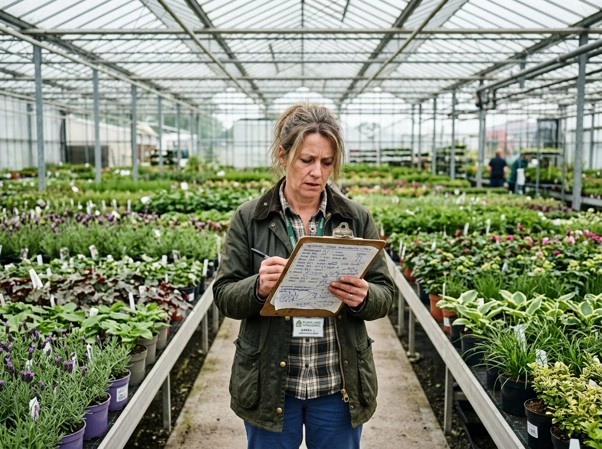 Manual availability lists are out of date straightaway.
Overselling is a predictable consequence.
Two customers ordering the same line from the same availability list, both expecting to receive the volume shown, is a situation that happens regularly in businesses managing availability manually. The discovery that both orders cannot be fulfilled — typically close to dispatch — creates a difficult customer conversation at the most pressured point of the season.
Updating the list is a manual overhead.
Someone has to compile the list, format it, and distribute it — typically multiple times per week during the season. During peak, when the team is at capacity, this process competes for time with picking, packing, and customer service. The list gets delayed, or details get missed.
Forward visibility is approximate.
Most availability lists show expected stock in broad windows — "available week 14" or "expected mid-April" — without the precision that customers need to plan their own ordering and retail scheduling. And when growing schedules shift due to weather, supplier delays, or other variables, updating that forward picture across a manually maintained list is slow and error-prone.
An ERP system built for horticulture wholesale replaces the static availability list with a live, dynamic availability view that is always current — because it is drawn directly from the stock and order records, not maintained separately. Your customers immediately benefit from:
Live current availability.
The system shows real-time stock levels by variety, pot size, quality grade, and location. As orders are placed, stock is reserved automatically — so the available quantity visible to the next customer reflects current commitments, not yesterday's stock count.
 Real time visibility of stock and orders.
Forward stock scheduling.
Planned production, bought-in stock on order, and growing-on stock can be entered into the system with expected availability dates. This forward availability is visible to the sales team and — through a B2B portal — to customers, giving them the visibility they need to plan pre-season orders with confidence.
Automatic reservation at point of order line.
As each line of a customer order is confirmed, the system reserves that stock against the order immediately. The next customer to enquire sees a reduced available quantity. The double-selling problem is eliminated at source — not caught after the fact.
Dynamic availability portal.
Rather than receiving a PDF twice a week, customers log into a B2B portal and see a live view of current and forward availability, personalised to their account. They can browse by variety, filter by availability window, and place orders directly — at any time, without needing to call or email. The wholesaler's availability is always current, always accurate, and always accessible.
Pre-season orders — placed months before the stock is ready — need to be managed through a lifecycle that is more complex than a standard wholesale transaction for the following reasons:
Order placement.
The customer places their order against forward availability. The system records the order, noting the expected availability window, but does not immediately reserve physical stock (because it doesn't exist yet). The order is visible in the forward order book, contributing to the demand picture that informs production and purchasing planning.
Stock reservation as availability builds.
As growing-on stock moves closer to availability — passing quality checks, reaching the right stage of development — it is scheduled into the forward availability pool. The system then allocates that incoming stock against the outstanding pre-season orders that are due in the relevant window, in priority order. The order moves from "forward commitment" to "reserved stock".
Customer confirmation.
When stock is reserved against a pre-season order, the customer can be notified automatically — confirming the variety, quantity, and expected delivery date. This gives garden centres and landscapers the certainty they need to commit to their own retail and project planning.
Delivery scheduling.
As delivery dates approach, the logistics team can see all orders due for dispatch in a given week, plan vehicle loads and routes, and generate dispatch documentation — including plant passports — from the system.
 Delivery planning automation
Shortfall management.
When growing schedules shift and the expected stock for a pre-season order is reduced or delayed, the system flags the affected orders. The commercial team can proactively manage the customer conversation — offering alternatives, adjusting delivery dates, or managing expectations — before it becomes a crisis.
Securing a pre-season order is only half the battle. The real test for a UK horticulture wholesaler happens when those delivery windows open, and months of planning must translate into physical vehicle loads. In a manual system, the transition from paper lists to the dispatch bay is notoriously chaotic. As peak shipping weeks approach, logistics teams are often left sorting through mismatched spreadsheets, trying to figure out which stock is actually ready to move and how to group orders geographically without overloading vehicles.
Beyond the operational benefits, effective forward availability management is a commercial differentiator in a sector where customer confidence in supply reliability is a key driver of loyalty.
Garden centres plan their seasons around reliable suppliers.
A garden centre that has placed pre-season orders with a wholesaler, received clear confirmation of what is reserved for them, and received their stock on time and at the volumes committed will plan next season's orders with the same supplier. One that has experienced last-minute shortfalls, poor communication, or unreliable availability data will be evaluating alternatives before the season is over.
Forward visibility supports better buying decisions for customers.
When customers can see what is coming through in the next four to eight weeks — not just what is in stock today — they can plan their retail assortment more effectively. That planning capability adds value to the supplier relationship beyond the product itself.
It enables upselling and range development.
A sales team with real-time visibility of forward availability — by variety, volume, and window — can have more informed commercial conversations with customers. "We have a strong forward position on this new variety in week 12 — would you like to reserve some?" is a sales conversation that drives incremental revenue. It's not one you can have confidently if your availability data is in a spreadsheet compiled two days ago.
Forward order management only delivers its full value when it is connected to the purchasing and production sides of the business — not just the sales side.
Demand-driven production planning.
The forward order book provides a demand signal for production and purchasing: which varieties, in what volumes, for which delivery windows. A growing operation that plans production against confirmed demand — rather than historical patterns or intuition — uses resources more efficiently and is less exposed to under or overproduction.
Purchased stock aligned to demand.
For businesses buying in stock to supplement their own growing, the forward order book informs purchasing: when to place orders with suppliers, what quantities to commit to, and how to align supplier lead times with customer delivery windows. The ERP connects these decisions — the order book drives the purchase plan, and the purchase plan feeds the availability schedule.
Weather and growing schedule variance.
When a late frost or extended cold period delays growing schedules — a routine occurrence in UK horticulture — the impact on forward availability can be assessed quickly within the system. Which orders are at risk? Which customers need to be contacted? What purchasing actions are needed to fill the gap? These questions are answered from system data, not from a series of phone calls between the warehouse, the growing team, and the sales office.
Protecting your wholesale margins requires shifting from a reactive posture to proactive defence. A specialised ERP system safeguards your profitability by tightening control over the entire pre-season lifecycle.
By replacing the friction of manual data entry with automated tracking, you do more than just save time. You insulate your business against market volatility, ensure every truck leaves fully optimised, and protect the hard-earned margins of your horticultural enterprise.
Profit4's stock reservation functionality — which automatically reserves stock at the point each sales order line is confirmed — forms the foundation of accurate forward availability management. The system's B2B eCommerce capability gives customers a live availability view through a self-service portal. Forward stock scheduling, pre-season order management, and integration between the order book and purchasing workflows are part of the platform's horticulture-specific capability, developed in collaboration with businesses including Bransford Webbs.

Head of New Business Development at OGL Software ERP Software for Stockists, Distributors and Merchants | Designed, Developed and Supported in the UK


